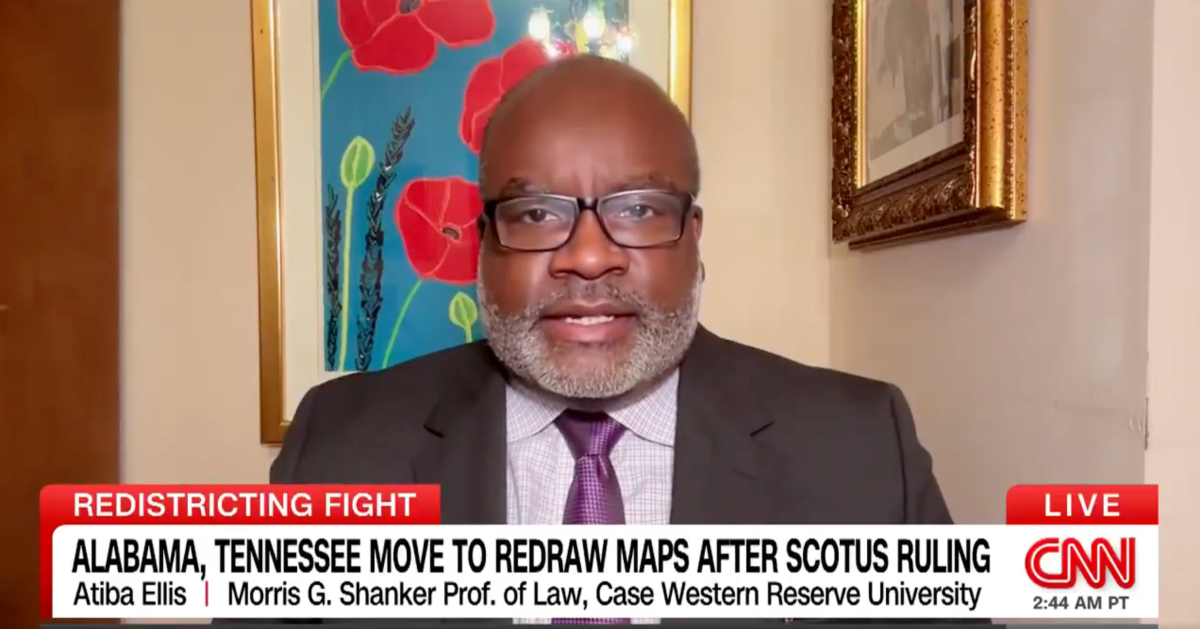
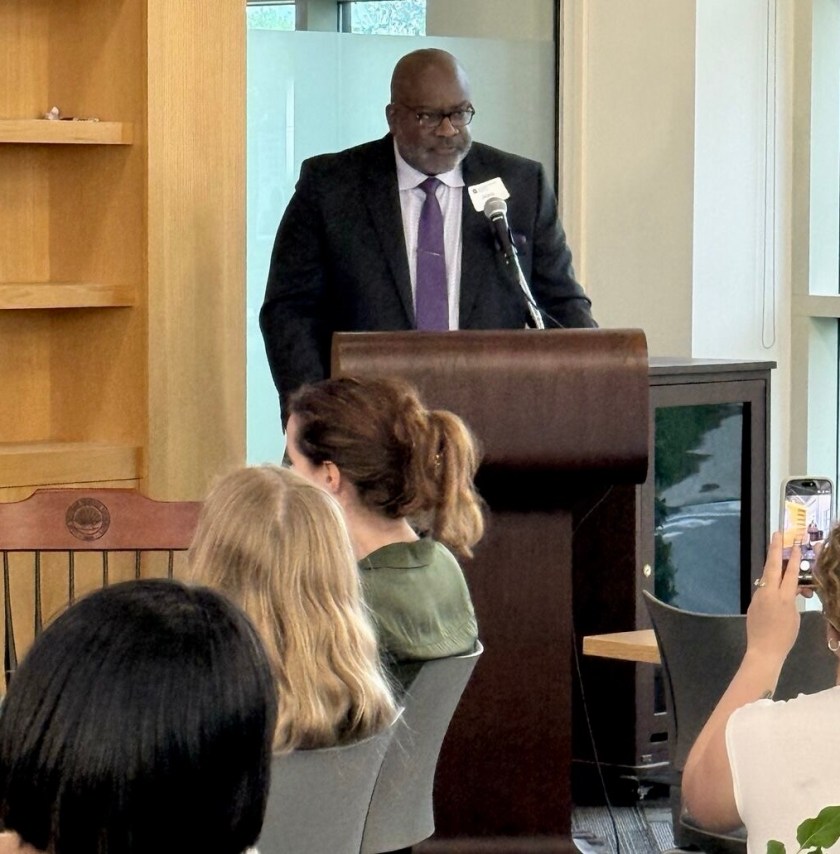
On Wednesday, May 13, 2026, I was formally recognized by the Case Western Reserve University School of Law as the Morris G. Shanker Professor of Law. In this manuscript for my investiture remarks, I offer a personal reflection on how the present moment in American democracy (especially post-Callais) fits into history and how I find hope in this most difficult of moments.
Last month, I was having lunch with a friend of decades-long acquaintance, a friend with whom I connected at my thirty-year college reunion. Early in our meal, I complained about a book chapter I was working on. I commented that I found myself frustrated. I felt sick of writing about the law of democracy over and over again.
Of course, the chapter is about voting rights and voter suppression – topics about which I’ve written at length in what is now the prelude to my twentieth year in the legal academy. I’ve tried to name voter suppression as inequality, an expression of—and a product of—disinformation, distrust, and discord around the belief that we can and should have an authentic multiracial democracy. The existence of voter suppression cuts against the vision that the voters (and We the People generally) ought to be treated as the true source of the legitimacy of our republic, since the legitimacy of government comes from “the consent of the governed.”
Those words from the Declaration of Independence make a promise, a promise that our Founders encoded (poorly) in the Constitution. And when, after two generations of struggle our republic found that this promise—such as it was—did not truly speak to the people since the Constitution perpetuated caste, our republic made this promise again in its “second founding” brought about by the Reconstruction Amendments and the laws meant to bolster it, like the Civil Rights Act of 1866 and the Klu Klux Klan Act of 1871. And when, again, that promise failed because Jim Crow made two Americas–a democracy for some, and a racial authoritarian state for others–and in the name of answering the demand of folks like Martin King’s who demanded of this country to “Give Us the Ballot,” this nation again restated its promise – through laws like the Civil Rights Act of 1964 and the Voting Rights Act of 1965.
In all these places I have found the possibility and the potential that we must our heart, be a democracy and build community despite the received boundaries of race, sex, gender, nationality, ability and distrust. I believe that we must create space for building authentic multiracial democratic community by naming and changing mechanisms that frustrate voting processes and risk backsliding from democratic aspirations. We must give space for every voice and each voter to believe that their vote matters. This will serve the goal of governmental legitimacy and preserve the democratic promise.
Continue reading “Cycles of History, Frustration, and Hope”
